
If AI Wrote the Code, What Did You Contribute?
If AI helped write the code, what did you contribute? Two business-logic examples show how a developer’s analysis improves an AI-built order-allocation tool.
Practical thinking for AI-era work
AI is changing tasks, roles, expectations and business models. A clearer picture of your own work will help you decide how to respond.

The problem
When a task becomes faster, cheaper, or self-service, an organisation may rethink the workflow around it: who does the work, how many people are needed, and what skills matter. A job title alone rarely tells the whole story.
The useful question is more specific: which parts of your work are changing, what value do you still bring, and what could you do next? ADAPTOR gives those questions an order.
The framework
ADAPTOR gives you a sequence for thinking about AI and your work. The seven Work Profiles help describe the work beneath a job title. A personal SWOT then connects that picture to goals and action.
The seven Work Profiles
Each letter names a kind of work, from Administrative Operators to Relationship Workers. A role may contain several. That mix gives you a starting point for the personal SWOT.
See the method at work
Five illustrative people show what personal Profiles, SWOT findings, goals and actions can look like. The seven Work Profiles show broader patterns in different kinds of work.

Go further with the book
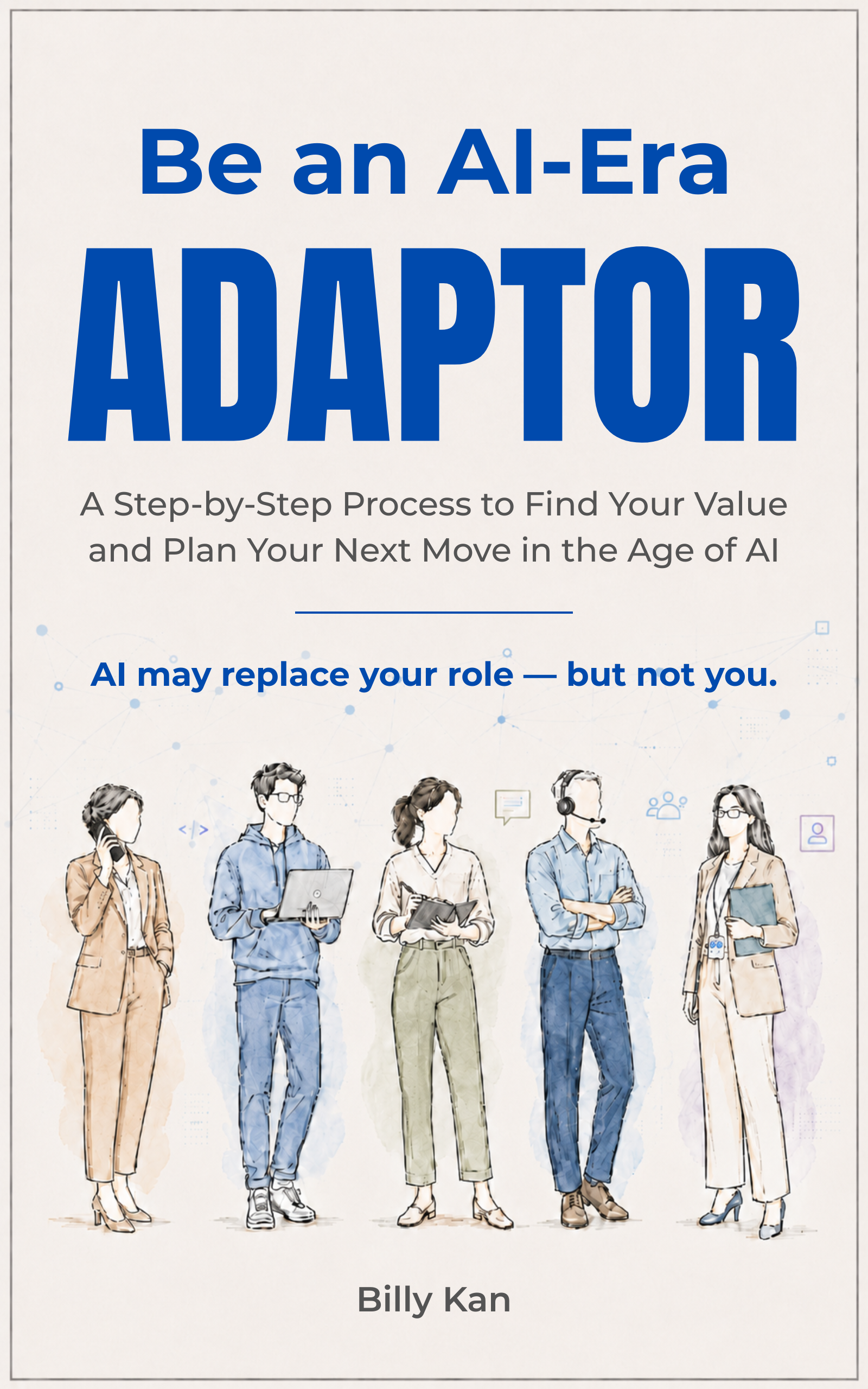
The examples on this site show possible results. Be an AI-Era ADAPTOR helps you apply the method to your own work, with a structured assessment, detailed guidance and a companion workbook.
Get the book to build your planFurther reading
If AI helped write the code, what did you contribute? Two business-logic examples show how a developer’s analysis improves an AI-built order-allocation tool.
Faster AI drafts can lead to better work or simply more work. Agree how to use the capacity gained before raising workload expectations.